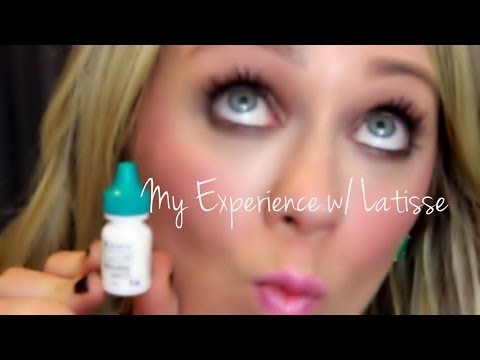
 Plays from YouTube when you click
HeyitsKatieOrtega · January 16, 2014 · 00:11:24 · 262,492 views
Katie Ortega's 2014 lash drop diary, fact checked: the main claim
Prescription lash drops filled in sparse lashes over about 16 weeks, after a rough first week of red, dry eyes, and careful application makes the small bottle last much longer.
Rated 2 of 5. As a diary, this is honest. Katie shows photos at 4, 8 and about 16 weeks, admits her eyes were so red in the first week that coworkers commented, and explains that she stopped for a week and came back every other night. Her timeline roughly matches the trials, which measured their main result at week 16.
Most of the runtime, though, goes to making a $150 bottle last. She pours a drop into the cap and dips an eyeliner brush into it, uses one drop for both eyes, and leaves the remainder in the cap. Those are workarounds for cost, and none of them was tested in a trial. The single-use applicators exist for a hygiene reason.
One detail is easy to miss. She started the drops about six months after LASIK, while her eyes were still dry, and dryness and redness are among the most common complaints with this drug. Her doctor signed off, and we cannot judge her eyes from a video. A viewer with recent eye surgery should take that question to their own eye doctor first rather than copy her schedule.
Katie Ortega's 2014 lash drop diary, fact checked: what holds up
- She describes the drug's origin correctly: it was a glaucoma eye drop, and lash growth was noticed as a side effect. The current US label still lists the 0.03% drops for lowering eye pressure.
- She expected results over months, and her pictures run to about 16 weeks. The 278-person trial measured its main result at week 16, when 78.1% on the drug had improved by at least one grade. Source
- She names redness as her biggest problem. In that same trial, conjunctival redness was the only side effect significantly more common than on the inactive solution, so her experience was typical, not unusual. Source
- She says the prescription matters because a doctor walked her through the risks. Iris color change, which she feared most, is listed in the label as likely to be permanent.
Katie Ortega's 2014 lash drop diary, fact checked: what it skips or gets wrong
- She calls the iris risk 'brown spots' that come from drops getting in the eye. The label describes a gradual increase in brown iris pigment that is likely permanent, not spots, and it does not depend only on a careless drop.
- Her cost tips, one drop shared between both eyes, a reused eyeliner brush and drops left in the cap, were never studied. The trials used the supplied applicators, so dose and contamination with these methods are unknown. Source
- She never mentions that results fade after stopping. A trial report found the gains largely gone 4 to 6 months after the last dose, which matters before you commit to a bottle every few months. Source
- She leaves out the sunken-eye change listed in the label from postmarketing reports. It is a cosmetic risk that a cosmetic user would want to hear about.
- Her switch to every other night was her own choice. The label for this drug says that using it more than once a day may weaken its effect on eye pressure, but nothing in our records tests skipped-day schedules for lashes.
Katie Ortega's 2014 lash drop diary, fact checked: strengths and weak spots
Strengths
- Shows photos at fixed points over about 16 weeks.
- Is open about red, irritated eyes in the first week.
- No sponsor, product or affiliate tie.
- Explains why a prescription was required.
Weak spots
- Spends most of its time on untested ways to stretch the bottle.
- Describes iris change inaccurately.
- Does not say that results fade after stopping.
- Recorded in 2014, before later eyebrow and safety data.
Katie Ortega's 2014 lash drop diary, fact checked: our recommendation
Skip it unless you want a feel for the first month. Read the 278-person eyelash trial and the label's warnings instead, which cover the timeline she shows plus the risks she leaves out.