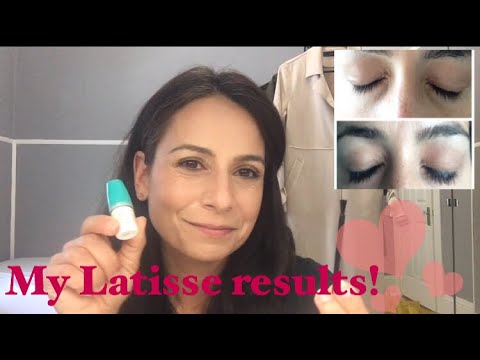
 Plays from YouTube when you click
Rouge NotBeige · July 25, 2018 · 00:06:42 · 3,107 views
Five years of on-and-off bimatoprost lash use, reviewed: the main claim
Bimatoprost works by acting on the hair growth cycle, lengthens lashes while you use it, and can change light eye color for good.
Better on safety than most lash reviews, and shakier on the science. The host warns that light-colored eyes can change color permanently, which is what the label says about iris pigment, and describes their own lid darkening, crusting at the corner of the eye when they used too much, and stray hair growing where the liquid ran onto the cheek. That is an unusually candid list of what can go wrong.
The biology is muddled. The video calls telogen the long growth phase and says the drug stimulates it. Anagen is the growth phase and telogen is the resting phase, so the explanation runs backwards even though the result on screen holds up. It also says the drug changes the color of the pupil, when the iris is the part that darkens.
The most useful detail is the five-year history. The host uses it for stretches of a few months, takes breaks, and notes that the lashes go back to their old length after stopping. That fits the trial finding that gains faded markedly 4 to 6 months after the last dose, and it is a fair reminder that the result is rented, so anyone starting should plan for it to last only while the drops do.
Five years of on-and-off bimatoprost lash use, reviewed: what holds up
- Warns that light eyes can turn brown for good. The label says iris pigmentation is likely to be permanent after stopping.
- Says lashes return to baseline after stopping, which matches the trial finding that the gain faded markedly 4 to 6 months after the last dose. Source
- Reports darker lid skin and says it can fade, which fits the label's note that lid skin changes may reverse in some patients.
- Notes that it usually needs a prescription and tells viewers to get an eye check first, a reasonable step for a drug with eye side effects.
- Explains that excess liquid spread past the lash line caused both the crusting and the cheek hair, a useful first-hand warning about runoff that most lash reviews never mention.
Five years of on-and-off bimatoprost lash use, reviewed: what it skips or gets wrong
- Swaps the hair cycle phases. Anagen is the growth phase and telogen is the resting phase, so saying the drug stimulates telogen gets the mechanism backwards.
- Says the drug can change the color of the pupil. The pupil is the dark opening; the iris is the colored part the label warns about.
- Skips eye redness, the most common reaction on the eye drop label at 45%, and the only side effect more frequent than vehicle in the lash trial. Source
- Leaves out the label's postmarketing reports of a sunken look around the eyes from fat loss, a change that matters for anyone using it for years.
- Describes switching to every other night or every third night with no mention that the trials tested once-daily use, so how well a lighter schedule works is unknown. Source
Five years of on-and-off bimatoprost lash use, reviewed: strengths and weak spots
Strengths
- Clear warning that iris color change can be permanent
- Candid about crusting, lid darkening and cheek hair from runoff
- Honest that lashes fall back after stopping
Weak spots
- Hair growth phases explained backwards
- Says pupil when the iris is meant
- No mention of eye redness or sunken-eye reports
Five years of on-and-off bimatoprost lash use, reviewed: our recommendation
Worth a watch for the honest side-effect list and the long-term picture of on-and-off use. Ignore the hair cycle explanation, and add eye redness and the sunken-eye reports to the risks the host already names.